Treasures from Worcestershire’s Past: ~49~ A letter from Ceylon
- 15th November 2014
This week’s Treasure is a letter from the Bantock archive, which has been chosen by Lesley Downing, Archive Assistant. This item shows just how far afield the remit of records from Worcestershire Archives can stretch as the letter was sent from Ceylon (modern day Sri Lanka). Although the opinions of the unknown author of this letter may be a little controversial, his letter provides a good description of the discoveries made there:
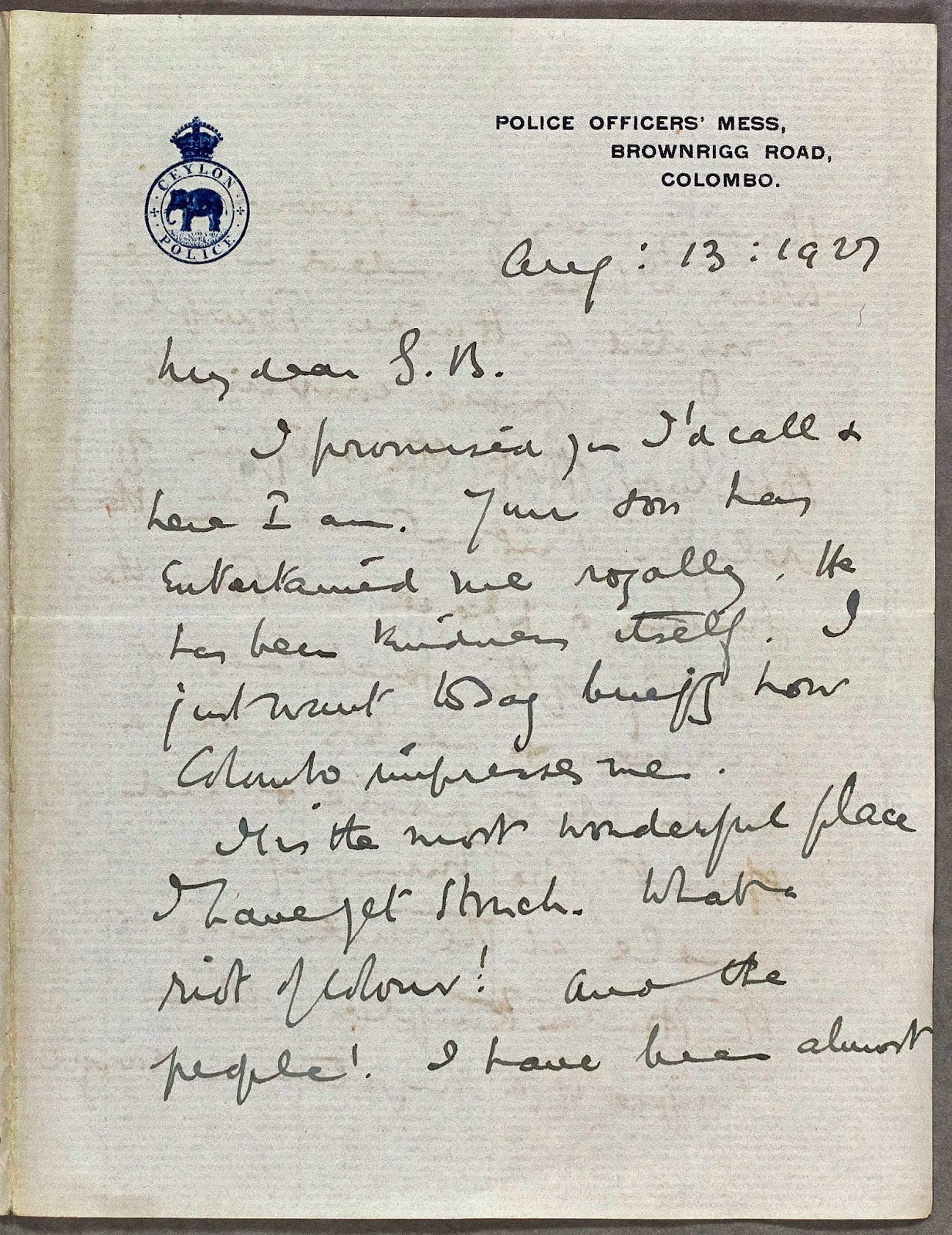
I came across this letter whilst looking through the archive of Sir Granville Bantock, ref: 705:462/4894. It is a very chatty letter, from one old friend to another, and was obviously written when the sender was caught up in a moment of discovery – in this case of the similarities and differences between his own religion, Anglican, and that of the country he was visiting, Ceylon, as Sri Lanka was then. It is a very personal, individual description, and bubbles with joy and enthusiasm at his surroundings and observations. It brings Ceylon, circa 1927 to Worcestershire, today.
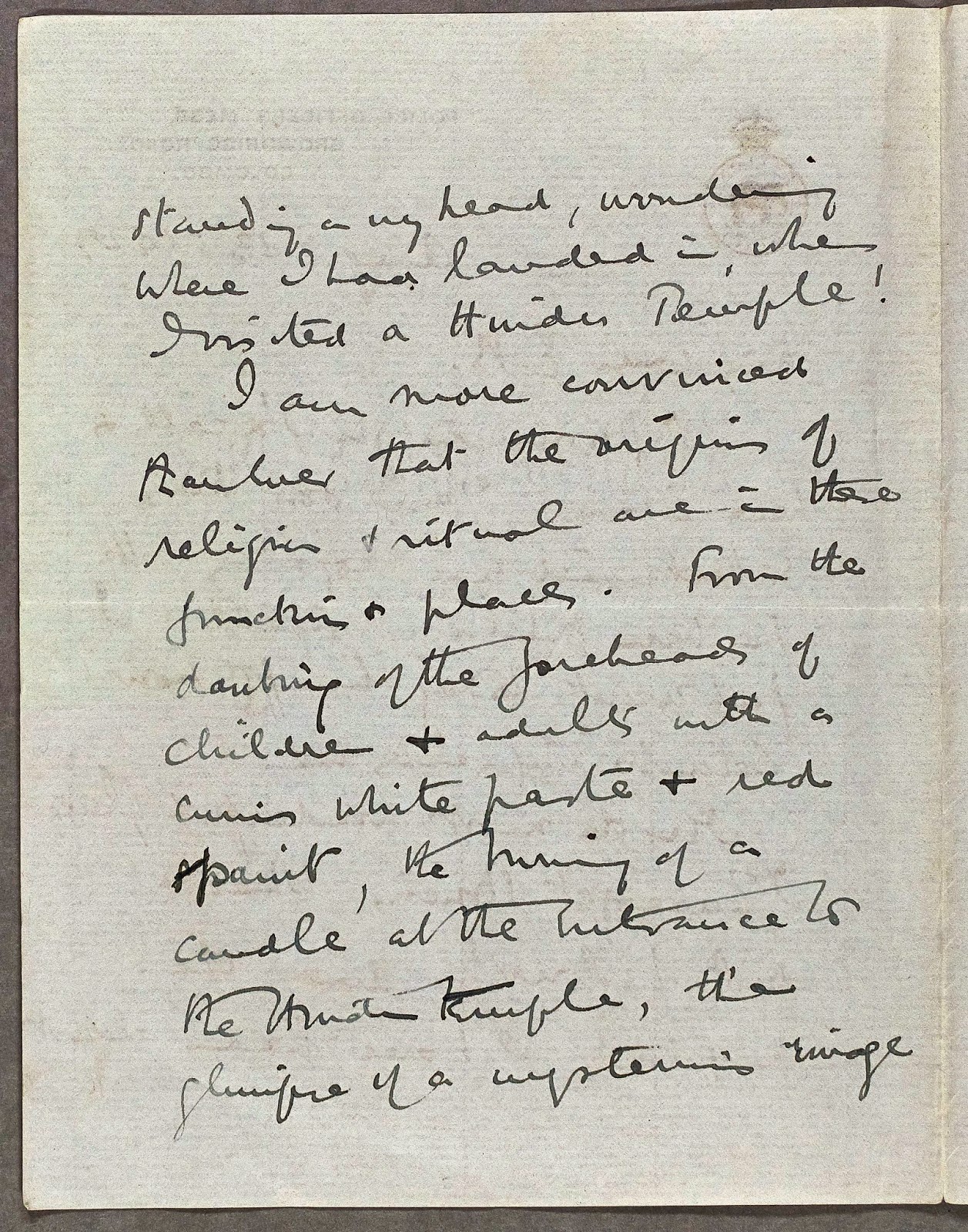
Here is a full transcription of the letter:
“My dear GB.
I promised you I’d call and here I am. Your son has entertained me royally. I just want to say briefly how Colombo impresses me.
It is the most wonderful place I have yet struck. What a riot of colour! And the people! I have been almost standing on my head, wondering where I had landed in, when I visited a Hindu Temple!
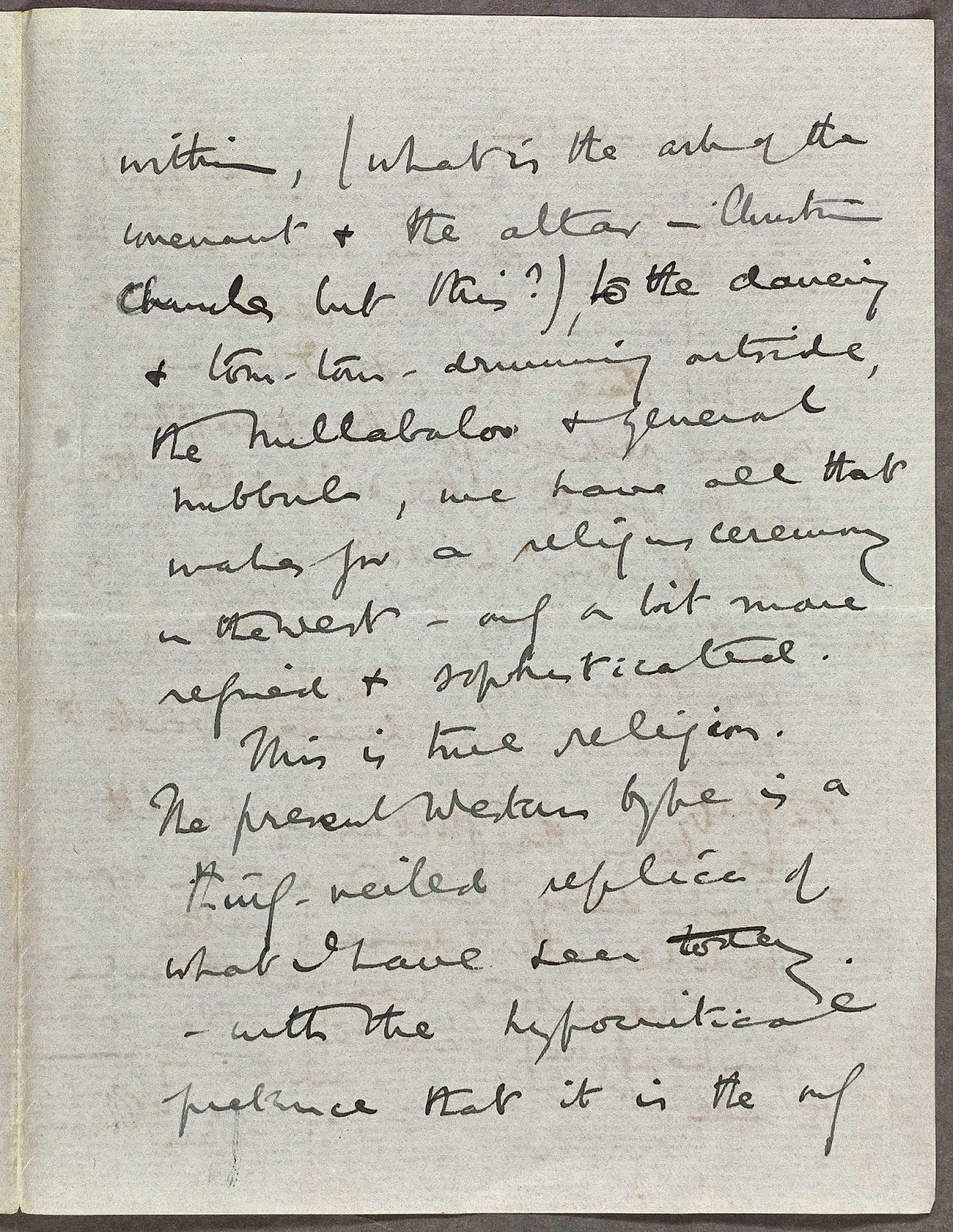
I am more convinced than ever that the origins of religion and ritual are in these functions and places. From the daubing of the foreheads of children and adults with a cumin white paste and red paint, the burning of a candle at the entrance of the Hindu Temple, the glimpse of a mysterious image within, (what is the arc of the covenant and the altar in Christian churches but this?), to the dancing and tom-tom drumming outside, the hullabaloo and general hubbub, we have all that makes for a religion ceremony in the west – only a bit more refined and sophisticated.
This is true religion. The present Western type is a thinly-veiled replica of what I have seen today – with the hypocritical pretence that it is the only true revelation.
Our smug religionists don’t like to peep too far back into the true sources of their ceremonies.
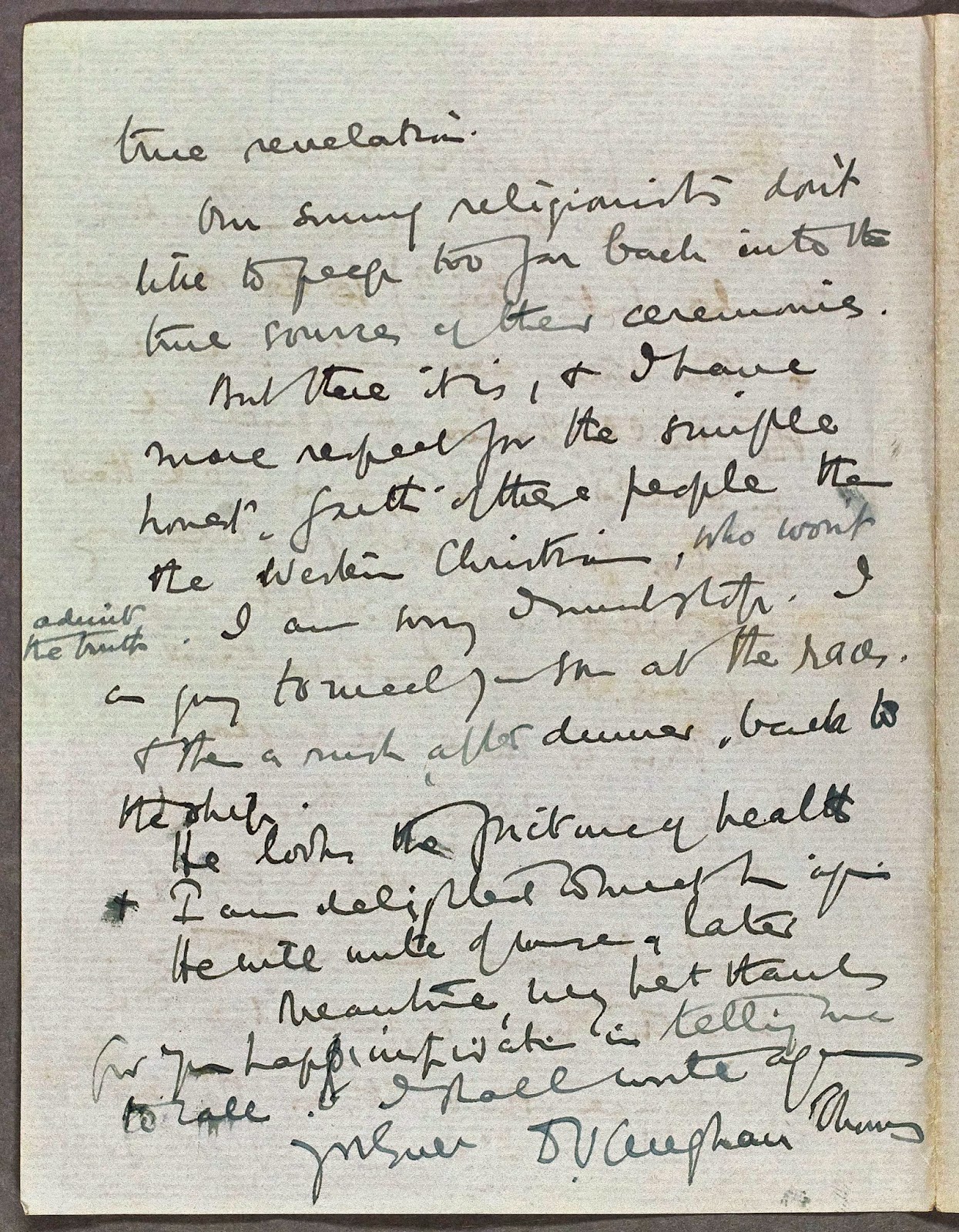
But there it is, and I have more respect for the simple honest faith of these people than the Western Christian, who won’t admit the truth.
I am sorry I must stop. I am going to meet your son at the races, and then a rush, after dinner back to the ship.
He looks the picture of health and I am delighted to meet him again. He will write, of course, later.
Meantime my best thanks for your help and inspiration in telling me to call. I shall write again, yours ever.
D[?] Vaughan [?]”
Sir Granville Bantock was an internationally acclaimed composer and conductor, a personal friend of Elgar and many other musical and artistic figures of his day. His archive consists of approximately 6,000 items, many of which are personal letters, newspaper cuttings from his long and illustrious career and other personal items.
The archive holds several other items with an international feel, and I think it is a lovely illustration of the fact that we may be the Worcestershire Archive Service, but that does not mean that is all we are. The Bantock archive itself holds letters from a German contact, Otto Kling written in French, 1906-1911, ref: 705:462/4664/6, some items in Persian, his own lecture notes on ‘Chinese Music and Drama’ and a huge volume of newspaper cuttings, VIP invitations, Concert Brochures etc., from his tour of Australia in 1938. This includes a lovely photograph of the man himself, then around 70 years of age, cooling off during a heat wave by wearing a sarong!
We hold many, many private archives of Worcestershire people, the great and the good, and, of course, the ordinary people themselves. There must be hundreds, if not thousands of items that bring the world to Worcestershire in this way, just waiting to be discovered.


I suggest that the writer of the letter is in fact David Vaughan Thomas (1873-1934) a Welsh composer. Educated at Llandovery and Oxford, he taught at Harrow before returning to Wales and marrying. He became an Overseas Examiner to Trinity College of Music and travelled widely, hence the letter from Ceylon. He died in South Africa.
(Information taken from the online Dictionary of Welsh Biography)
Kevin Allen